Senses, Play and What Happens When Education Ends
Hello everyone,
September always feels like a new beginning in education. Children return to classrooms, new pupils arrive, routines change and, for some children, the sensory demands of school suddenly become very noticeable again.
I’ve spent much of the summer thinking and writing about exactly that.
Much of my summer has been spent researching, writing and reviewing feedback for a new project exploring how we experience and respond to the sensory world.
Those of you who have followed my work for some time will know that sensory understanding has been woven through much of my career — from specialist education and therapeutic approaches to play, technology and the environment.
This new work takes that thinking considerably further.
I’ve also been fortunate to have schools, practitioners and organisations in the UK and internationally contributing feedback as the project develops. Their observations have already made me stop, rethink and refine some of my original ideas — which is exactly what I hoped a pilot would do.
I’m deliberately not saying too much about it just yet!
It was almost ready for publishing and I’ve gone down yet another research rabbit hole !
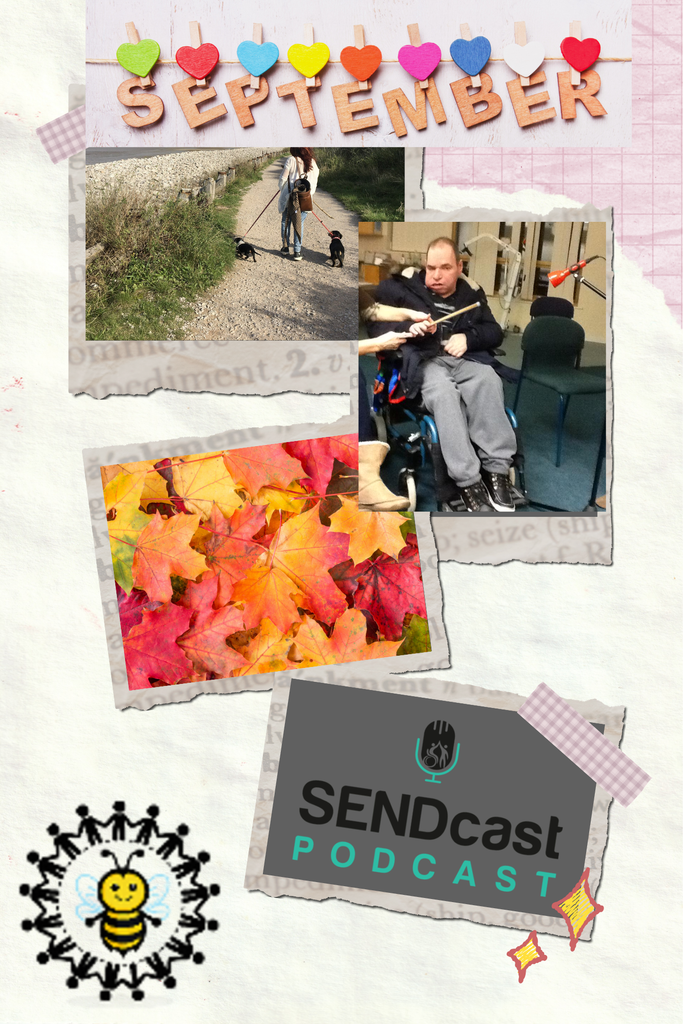
I was delighted recently to join The SENDcast to talk about The Power of Play Schemas.
Repeatedly lining things up, transporting objects, enclosing themselves or their toys, spinning, dropping, throwing or covering things can sometimes leave adults wondering why a child keeps doing the same thing.
Often, there is considerably more going on than we realise.
Understanding schemas can help us recognise patterns in children’s play and use those patterns to create opportunities for learning rather than continually trying to redirect them.
👉 Listen to my SENDcast conversation about The Power of Play Schemas
A toolkit for the real world
My Early Years Neurodiversity Toolkit was written for the people actually supporting children day to day — families, early-years practitioners, teachers and other professionals.
One recent reviewer described it in a way that particularly pleased me:
“This toolkit feels like having a wise colleague right beside you in the classroom.”
That was precisely what I hoped the book would become: not theory for theory’s sake, but something people can pick up when they need an idea, an observation tool or a different way of looking at what a child may be communicating.
👉 Find out more about the Early Years Neurodiversity Toolkit
And what happens when school ends?
This is something I keep returning to.
When I was headteacher of Ysgol Pen Coch, we opened our specialist facilities after school so that adults with learning disabilities and complex needs could continue accessing therapeutic opportunities. That included facilities and equipment that were extremely difficult for families to access elsewhere.
At the time, Estyn recognised this work, noting:
“The school offers valuable after school therapy sessions for adults with learning disabilities as part of its vision for meeting the long-term needs of its pupils and other members of the community.”
I still believe passionately in that principle.
Across the country, special schools contain hydrotherapy pools, hoists, sensory spaces, specialist communication technology and therapeutic equipment. At the end of the school day, much of it sits unused.
Meanwhile, young people with profound and complex needs become adults — and too often the opportunities available to them shrink rather than grow.
Why should turning 19, 21 or 25 mean losing access to experiences, communication and therapies that contribute to someone’s quality of life?
I would like to see special schools become a much greater part of lifelong community provision. It is an issue I intend to keep talking about. I will be speaking on this very topic at the World Congress for Special Needs Education (WCSNE) conference at Oxford University in November.
Some free things before I go…
There are now several free resources available through my website, including my adapted VIP Skills Profile, an introductory sensory-play kit and a guide to help schools and settings get money for their establishment.
You can also watch my videos on YouTube and listen to my podcast conversations free.
👉 Visit my website and explore the free resources
Thank you, as always, for reading — and particularly to everyone who has bought a book, shared my work, contributed to the Sensory Hive pilot or simply sent me a message telling me that something I wrote helped.
Those messages matter enormously.
Ange x
