Explore Ange’s many published books. Ange has spoken at conferences worldwide and has written many research papers in the field of SEN and contributes regularly to SEN magazines.
Non-Fiction Books
These are some of the non-fiction books authored by Ange Anderson : With the latest book first :
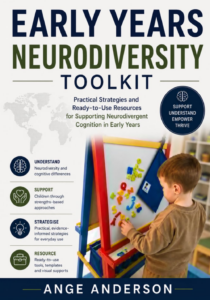
Every day, parents and practitioners support children and young people who experience differences in communication, sensory processing, behaviour, sleep, feeding, emotional regulation, learning and social interaction. Many wait months—or even years—for assessments, specialist advice or formal diagnoses while wondering how best to help.
Rather than waiting for labels to unlock support, this book encourages readers to understand the individual child, recognise unmet needs and create supportive environments where every child can thrive.
The Early Years Neurodiversity Toolkit provides practical, evidence-informed strategies and ready-to-use resources that can be implemented immediately at home, in nurseries, schools and specialist settings.
Whether you are a parent, early years practitioner, teacher, SENDCo, therapist, student, support worker, respite or family carer, this comprehensive guide will help you better understand developmental differences, respond with confidence and provide practical support that can make a meaningful difference every day.
Because every child deserves their best life and the opportunity to reach their full potential.

Learning Through Play for Children with PMLD and Complex Needs
“A clear, thoughtful resource that shows how purposeful play can genuinely support cognition, mental health, and wellbeing for children with PMLD and complex needs. The range of play approaches—Lego therapy, sand play, digital play, and sensory activities—is well explained, and the included resources make it easy to adapt ideas to real‑world settings. A must‑have for teachers, therapists, and parents.” James O’Neill

The Future of Special schools and Therapeutic intervention
Edited by Ange but written by many therapists working at the school she led for 10 years .Ysgol Pen Coch. All proceeds from the sale of this book go to the school.

Virtual Reality, Augmented Reality and Artificial Intelligence in Special Education
Muhammad A.
5 out of 5 stars
A Clear and Modern Take on Technology in Special Education
Reviewed in the United Kingdom on 22 April 2026
Technology in education can sometimes feel overwhelming, but this guide breaks it down in a way that actually makes sense. What I liked most is how it connects modern tools like VR and AI to real classroom situations, especially for students with learning differences. The explanations are simple enough to follow without losing depth, and the practical ideas feel realistic to implement. It’s especially useful for teachers who want to explore new methods without feeling lost in technical details. A genuinely helpful resource for today’s evolving learning environment.

Music, Sound and Vibration in Special Education: How to Enrich Your Specialist Setting
Nsweet
5 out of 5 stars
A genuinely moving, practical resource.
Reviewed in the United Kingdom on 17 August 2026
A genuinely moving, practical resource for anyone working in special education. Anderson’s real-world case studies bring the theory to life, and the mix of therapy explanations, staff training advice, and photocopiable policies makes it immediately useful. The personal anecdotes, especially about the karaoke machine, stay with you long after reading. Essential reading for SEND settings.

Therapeutic Trampolining for Children and Young People with Special Educational Needs
Laura t
5 out of 5 stars
Highly recommend
Reviewed in the United Kingdom on 25 March 2026
I found this to be an incredibly practical and well-structured resource for anyone working with children and young people with special educational needs. It doesn’t just explain the benefits of therapeutic trampolining — it shows you exactly how to implement it safely and effectively in real settings. The author’s experience is clear throughout, which gives the guidance a sense of confidence and credibility.
What stood out most is how comprehensive it is. From improving physical skills like balance and coordination to supporting communication and emotional wellbeing, the book covers a wide range of benefits. The inclusion of ready-to-use materials like lesson plans, communication tools, and risk assessments is especially helpful and saves a huge amount of time for practitioners.
This feels less like a general guide and more like a complete toolkit. Whether you’re working in a school, running a club, or exploring therapeutic options at home, it gives you the structure and resources to get started properly. It’s a valuable, practical addition for anyone interested in using movement-based approaches to support children with additional needs.

For the past 40 years, NABE (The National Association of Book Entrepreneurs) has honoured outstanding books through their prestigious Pinnacle Book Achievement Awards. These awards recognise excellence in content, quality, writing style, presentation, and cover design.
I’m thrilled to share that Meditation & Neurodivergence has been named a Best Book in the Parenting & Family Category at the Summer 2025 Pinnacle Book Achievement Awards!
This book was created to make meditation more accessible for neurodivergent children, young people, and their families — turning a practice that can feel “out of reach” into something supportive, calming, and meaningful.
It’s wonderful to see this work recognised, and I hope it continues to help parents, carers, teachers, and therapists who want to bring meditation into daily life in a practical way.
Thank you for your support — every view, comment, share, and kind word helps spread these resources further

.
#Neurodivergence #Parenting #Meditation #bookawards

Ash
4 out of 5 stars
Useful guide to keep all details consolidated
Reviewed in the United Kingdom on 25 August 2025
My Child’s Health & Education Organiser is a calm companion for parents who are juggling appointments, specialists and forms. It does not tell you what to think. It gives you a structure for everything you already know about your child, so you can advocate with confidence. Sections cover medical histories, seizure and allergy logs, vaccinations, sleep, feeding and sensory triggers, along with communication preferences and the tools your child uses.