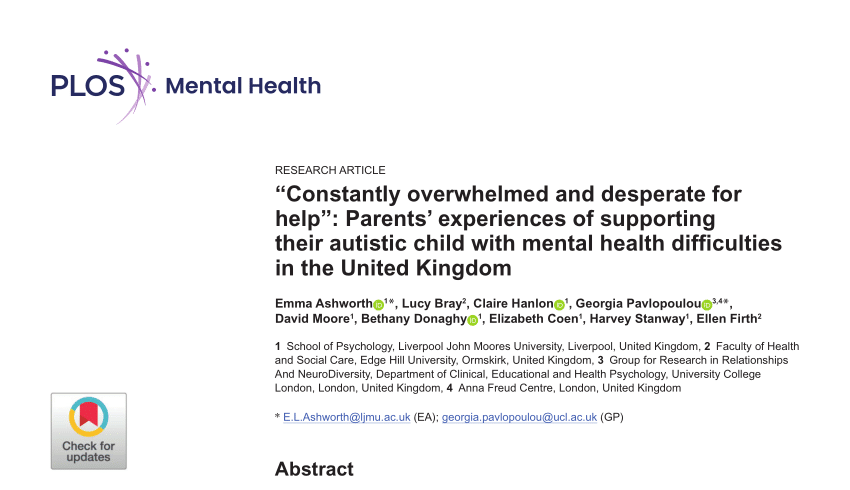

Sometimes the problem isn’t lack of support — it’s too much of it.
When support becomes noise.
In my work, I am often asked for advice.
Rarely, though it does happen , that advice isn’t followed through.
This is not a criticism of families or practitioners. In fact, it reflects something far more complex — and far more common — in the world of supporting neurodivergent individuals.
We tend to assume that more support, more input, and more expertise will naturally lead to better outcomes.
But in practice, the opposite can sometimes happen.
The illusion of “more help”
When a child is struggling, it is entirely natural for parents and carers to seek as much support as possible. Advice may come from multiple sources — professionals, online platforms, social media, courses, books, and well-meaning individuals.
Each piece of advice may be valid in isolation. But together, they can become overwhelming.
Different approaches. Different language. Different expectations.
And often, no clear pathway forward.
What happens next
In these situations, I often observe a pattern.
Advice is requested.
Suggestions are given.
Initial interest is shown.
But then… very little changes.
Not because the advice is wrong. Not because the adults involved do not care. But because implementation requires something far more demanding than access to information.
It requires:
consistency
confidence
time
and the ability to tolerate uncertainty
Without these, even the best advice remains unused.
The impact on the child
For the child, this creates an environment that is inconsistent and unpredictable.
One day, a new strategy is introduced.
The next, it is dropped.
A different approach replaces it.
Then another.
From the outside, it can look like “lots is being tried.”
But from the child’s perspective, there is no stable framework to learn within.
And learning — particularly for those with complex or sensory needs — depends heavily on consistency, repetition, and trust.
The uncomfortable truth is not all support leads to change.
Change only happens when advice is understood, applied and sustained over time
Access to support is not the issue. The ability to act on it is.
When support becomes noise
There comes a point where additional input no longer adds clarity — it creates noise.
Too many voices. Too many interpretations. Too many starting points.
In this space, adults can become:
unsure of what to prioritise
hesitant to commit to one approach
afraid of “getting it wrong”
And so, unintentionally, very little moves forward.
What is needed instead
In my experience, progress is far more likely when:
one approach is chosen and understood
Time is given for it to embed, and small changes are recognised and built upon.
Then the adults involved feel confident enough to continue, even when results are not immediate.
This requires a shift from:
seeking more advice to committing to action
This is not just about individual families or settings.
It reflects a wider issue in how we think about support.
We have become very good at providing information.
Less so at supporting implementation.
And yet it is implementation — not information — that changes outcomes.
Final thought
When adults are unsure, inconsistent or overwhelmed, learning slows. Not because of the child. But because of the environment around them.
If we want to truly support neurodivergent individuals, we need to look not only at what we offer — but at how it is used.
Because support, no matter how well intentioned, only makes a difference when it is applied, not just received.
A Question for You
What have you found works best — multiple approaches, or consistency over time?
